Understanding the Reactive Nature of Vue.js: How It Transforms Your Code
Vue.js is a progressive JavaScript framework that enhances web development by using its reactive nature to create dynamic user interfaces. At the core of Vue.js lies the concept of reactivity, which refers to its ability to automatically update the view whenever the underlying data changes. This reactivity is facilitated by a system of data binding that allows Vue to track dependencies and make efficient updates without the need for manual DOM manipulation. As a result, developers can focus on writing clean, maintainable code while leaving the complexities of view updates to the framework.
Understanding the reactive system of Vue.js involves recognizing how it transforms your code and improves its efficiency. With the use of computed properties and watchers, Vue provides developers with powerful tools to react to changes in data seamlessly. For instance, computed properties cache results and only recalculate when their dependencies change, leading to better performance. Meanwhile, watchers enable developers to execute code in response to specific changes in data, making it easier to handle complex application logic while enhancing overall application responsiveness.
5 Essential Features of Vue.js That Will Elevate Your Development Projects
Vue.js has quickly gained popularity among developers due to its flexibility and ease of use. Here are 5 essential features that can elevate your development projects:
- Reactive Data Binding: Vue.js utilizes a reactive data binding system that simplifies how you handle state across your application. This feature ensures that any changes to your data are immediately reflected in the UI, allowing for a smoother user experience.
- Component-Based Architecture: Build your interfaces using reusable components, which promotes better organization and maintainability of your code. Components can interact seamlessly, making complex applications easier to manage.
- Single File Components: With Vue, you can encapsulate HTML, CSS, and JavaScript within a single file, enhancing module separation and increasing the ease of collaboration in larger teams.
- Vue Router: This built-in routing library allows for effortless navigation within your applications. You can easily configure routes and create dynamic navigation that enhances user engagement.
- Vuex for State Management: For larger applications, managing state can become complex. Vuex provides a centralized store for all components, making it easier to maintain and debug your application.
Is Vue.js the Right Framework for Your Next Web Application?
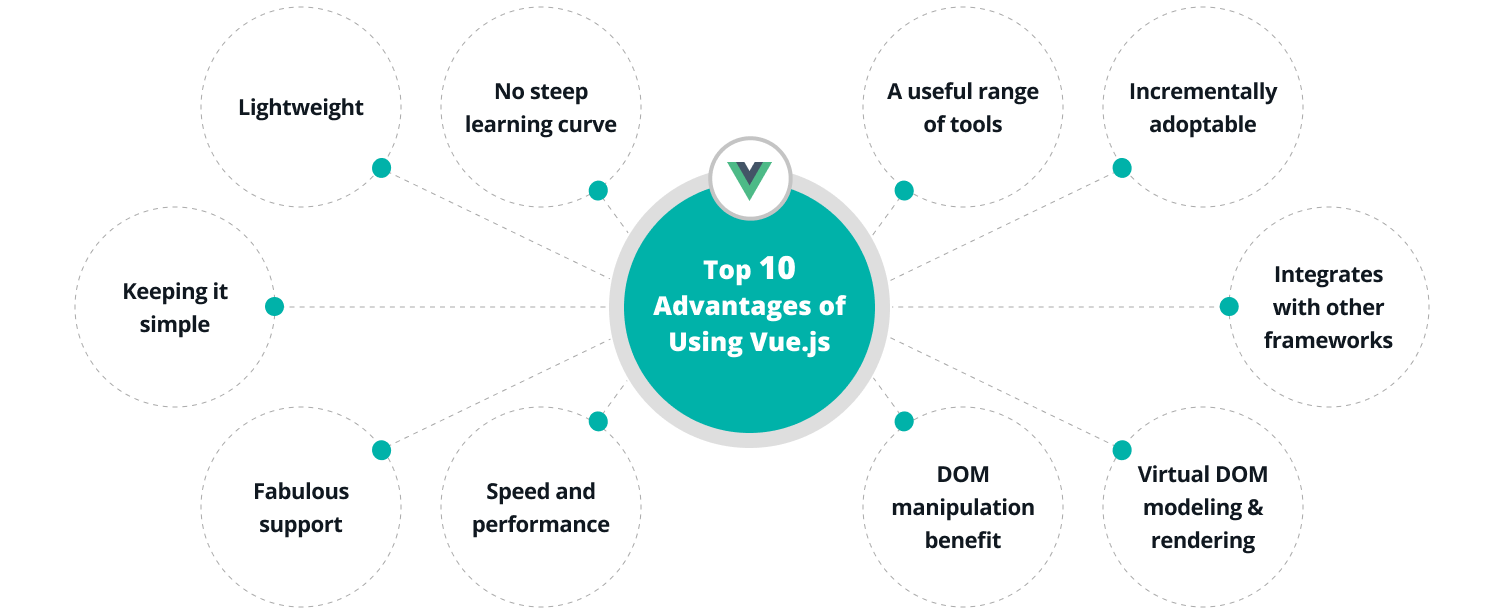
When considering a web application framework, Vue.js has emerged as a popular choice among developers for its simplicity and flexibility. This progressive framework is renowned for its ability to integrate with existing projects seamlessly, which makes it a strong candidate if you're looking to enhance an application without a complete overhaul. Additionally, Vue.js offers a reactive data-binding system and a component-based architecture, allowing for high reusability of components which can significantly speed up development time.
However, before committing to Vue.js, consider factors such as your project requirements, team expertise, and long-term maintenance. For example, if your application necessitates strong state management or you anticipate complex data flows, you might also want to explore using libraries like Vuex alongside Vue.js. Ultimately, Vue.js is an excellent choice for many scenarios, but evaluating your specific needs will ensure you make the best decision for your next web application.